


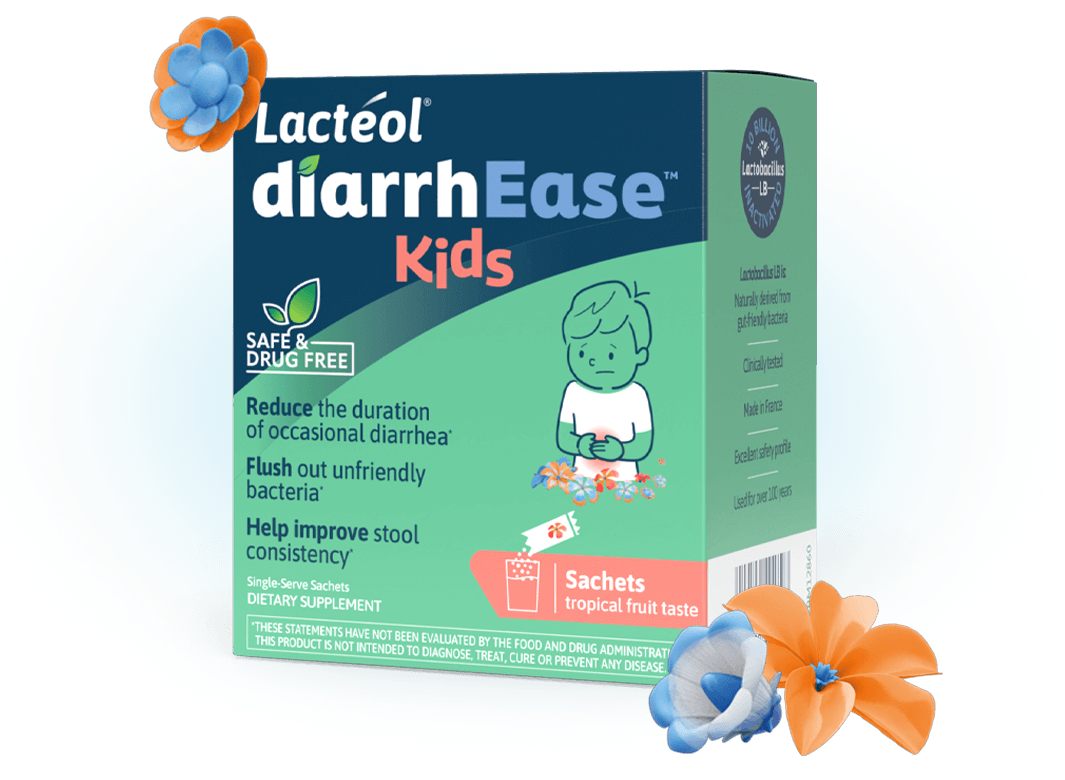
Suitable for children or toddlers over 6 months
Lactéol® diarrhEase™ Kids
A safe and simple solution made to soothe occasional digestive upsets*
Lactéol® diarrhEase™ Kids is a digestive postbiotic, that includes Lactobacillus LB. Lactobacillus LB works naturally with the body to help fight unfriendly bacteria.*
What is Lactéol® diarrhEase™ kids?
Lactéol® diarrhEase™ Kids is a digestive postbiotic specifically designed to soothe occasional digestive upsets including stomach discomfort and diarrhea.*
Postbiotics are non-living organisms that promote a healthy functioning digestive system*, while being gentle.
Lactobacillus LB is the active dietary ingredient in Lactéol® diarrhEase™ Kids. It is not affected by the acid environment of the stomach, allowing it to reach the intestines where it's needed most.¹ Lactobacillus LB has been shown to play an important role in restoring the delicate natural balance of micro-organisms found in our intestines.*
Lactobacillus LB helps defend the gut to fight unfriendly bacteria.*
When should I give Lactéol® diarrhEase™ to my child?

During occasional digestive upsets*
Lactobacillus LB naturally strengthens and reinforces the good bacteria in the digestive tract*

If you experience symptoms associated with occasional diarrhea.*
Lactéol® diarrhEase™ helps relieve occasional diarrhea associated symptoms, such as abdominal discomfort and bloating*

During times when occasional diarrhea may occur, like while taking antibiotics
Lactobacillus LB shortens the duration of occasional diarrhea*

Keep Lactéol® products handy when traveling
Lactéol® diarrhEase™ helps minimize travel associated stomach and digestive issues*
How should Lactéol® diarrhEase™ Kids be taken?
As with any dietary supplement or medication, consult with your doctor or pharmacist before use.
Lactéol® diarrhEase™ Kids sachets are dissolved in water and taken by mouth. Each serving contains 10 billion inactivated Lactobacillus LB.
Suitable for children or toddlers over 6 months
Directions for use
Children or toddlers 6 months to 5 years of age, start with 1 sachet two times on the first day. Then take 1 sachet every 12 hours for at least 2 to 3 days. If taking along with antibiotics, continue taking one sachet per day for at least 7 days. Lacteol diarrhEase™ may be used for up to 30 days.
Simply mix the contents of the sachet either in a baby bottle with water or in a half glass of water. Stir the mixture to make sure that the powder is dispersed then give it to your child to drink.

Other ingredients: Tapioca maltodextrin, natural flavors, steviol glycosides.
Contains Milk (lactose), Soy, Wheat
To find out more


Collapsible content
REFERENCES
- Warda AK, Clooney AG, Ryan F, de Almeida Bettio PH, Di Benedetto G, Ross RP, et al. A postbiotic consisting of heat-treated lactobacilli has a bifidogenic effect in pure culture and in human fermented faecal communities. Appl Environ Microbiol. 2021;87(8).
- Warda AK, de Almeida Bettio PH, Hueston CM, Di Benedetto G, Clooney AG, Hill C. Oral Administration of Heat-Treated Lactobacilli Modifies the Murine Microbiome and Reduces Citrobacter Induced Colitis. Front Microbiol. 2020;11:69
- Lactéol® sachets. Summary of Product Characteristics. To be validated at country level.
- Lactéol® capsules. Summary of Product Characteristics. To be validated at country level.
- Tarrerias AL et al. The effect of inactivated Lactobacillus LB fermented culture medium on symptom severity: observational investigation in 297 patients with diarrhea-predominant irritable bowel syndrome. REF Dig Dis.2011;29(6):588-91.
- Piqué N, Berlanga M, Miñana-Galbis D. Health Benefits of Heat-Killed (Tyndallized) Probiotics: An Overview. Int J Mol Sci. 2019;20(10):2534.
- Simakachorn N, et al. Clinical evaluation of the addition of lyophilized, heat-killed Lactobacillus acidophilus LB to oral rehydration therapy in the treatment of acute diarrhea in children. J Pediatr Gastroenterol Nutr. 2000;30(1):68-72.
- Guarino A, et al. European Society for Pediatric Gastroenterology, Hepatology, and Nutrition/European Society for Pediatric Infectious Diseases evidence-based guidelines for the management of acute gastroenteritis in children in Europe. J Pediatr Gastroenterol Nutr. 2014 Jul;59(1):132-52.


